







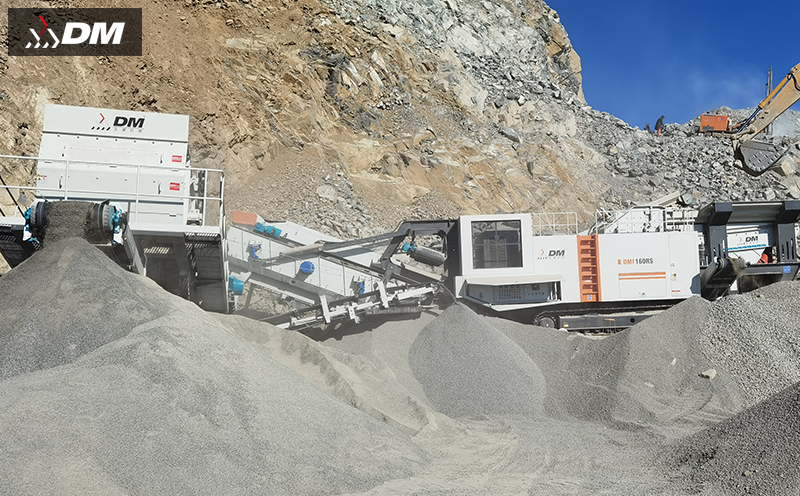
In industries such as mining, building demolition, and road construction, crushers serve as core processing equipment. Their operational stability and service life directly determine project efficiency and investment returns. However, severe operating conditions—including high temperature and humidity, heavy dust, high material hardness and abrasiveness, and continuous high-intensity operations—pose the ultimate test for crusher durability. Many enterprises, having chosen inadequately adapted equipment, face frequent breakdowns, high maintenance costs, and fluctuating productivity, severely eroding investment returns. To address this, durable crushers specifically designed for severe operating conditions have emerged. With exceptional wear resistance, stable performance, and long service life, they have become a core tool for enterprises to maximize return on investment (ROI).
I. The "Wear Trap" of Severe Operating Conditions: Pain Points of Traditional Crushers
Severe operating conditions cause comprehensive wear on crushers, which traditional equipment often struggles to withstand. In hard rock mines, materials such as granite and basalt have a Mohs hardness exceeding 7 and contain numerous abrasive impurities like quartz sand. Wear parts of traditional crushers—such as crushing chamber liners, hammers, and mantles—wear extremely quickly, with an average replacement cycle of only 1-3 months. This not only leads to frequent downtime for part replacement but also drives up spare parts procurement costs. In tropical mines or underground mines, high humidity (relative humidity often exceeding 80%) combined with dust accelerates the corrosion and aging of equipment bearings and electrical systems, causing malfunctions such as jamming and short circuits, and in severe cases, even equipment scrapping. At building demolition sites, materials are complex, mixed with steel bars, concrete blocks, and construction waste. Traditional crushers lack targeted overload and anti-blocking designs, making them prone to stalling, motor burnout, and other issues, resulting in significant unproductive man-hours.
More critically, the "short lifespan" and "fragility" of traditional crushers directly impact ROI. On one hand, frequent downtime leads to a sharp drop in productivity, causing enterprises to miss market windows. On the other hand, high maintenance costs, spare parts expenses, and labor costs continuously erode project profits. For long-term large-scale projects, the hidden losses caused by insufficient equipment durability may even exceed the purchase cost of the equipment itself, becoming a key bottleneck restricting enterprise profitability.
II. The "Hardcore Genes" of Durable Crushers: Custom Upgrades for Severe Operating Conditions
Durable crushers designed for severe operating conditions are not simply "reinforced and thickened" but feature full-dimensional custom upgrades from materials, structure, and processes to protection systems, forging "hardcore genes" to resist extreme environments.
In terms of core materials, ultra-wear-resistant alloy technology breaks through the lifespan bottleneck of wear parts. Crushing chamber liners and hammers are made of special materials such as high-chromium alloy and wear-resistant manganese steel. Through multiple heat treatment processes including quenching and tempering, their hardness is increased to over HRC60 while maintaining good toughness. Their wear resistance is 3-5 times higher than traditional materials, and the replacement cycle is extended to 6-12 months, significantly reducing the frequency of downtime for part replacement. Key rotating components such as bearings and bushings adopt a sealed design, paired with high-temperature and corrosion-resistant special grease, effectively preventing dust and moisture intrusion, and extending service life by more than 2 times.
In structural design, the core logic of "impact resistance and overload protection" is integrated. A modular crushing chamber design allows for quick replacement of liner types according to material characteristics, adapting to the crushing needs of different materials such as hard rock, construction waste, and ore. The optimized eccentric shaft speed and crushing chamber profile form a "laminated crushing" effect, reducing direct impact of materials on wear parts while improving crushing efficiency. A hydraulic safety device and intelligent overload protection system are added. When encountering uncrushable hard objects (such as steel bars and large rock blocks), the system can automatically relieve pressure and reverse discharge to avoid equipment stalling, and automatically resume operation after the hard objects are discharged, completely solving the blocking problem.
In the protection system, adaptability to extreme environments is enhanced. An efficient dust-proof sealing system is equipped, adopting a multi-layer labyrinth seal + negative pressure dust removal design to control the dust concentration inside the equipment at an extremely low level, protecting electrical components and rotating parts. For high-temperature and high-humidity environments, the electrical control cabinet is treated for moisture and condensation prevention, with cooling fans and dehumidification devices installed to ensure stable operation of electronic components. Some models also feature anti-corrosion coatings and explosion-proof designs, adapting to special operating conditions such as coastal salt spray environments and flammable and explosive mines.
III. Maximizing ROI: The "Value Loop" of Durable Crushers
The core value of durable crushers lies in building a "value loop" for ROI through "long-term stable operation," creating sustained benefits for enterprises from three dimensions: cost reduction, efficiency improvement, and lifespan extension.
Significant cost reduction directly increases profit margins. The replacement cycle of wear parts is extended by 3-5 times, reducing spare parts procurement costs by more than 60%. Equipment downtime due to failures is reduced by 80%, significantly lowering maintenance labor costs. The overall service life of the equipment can reach 10-15 years, nearly doubling that of traditional crushers (5-8 years), greatly reducing the annual equipment depreciation cost. For a hard rock mine with an annual output of 1 million tons, the use of durable crushers can save approximately 2-3 million yuan in spare parts and maintenance costs per year, with cumulative cost savings exceeding 10 million yuan over 5 years.
Continuous efficiency improvement taps into production potential. Stable operating conditions ensure "full capacity upon startup," increasing the annual effective operating time from 6,000 hours for traditional equipment to over 7,500 hours, a 25% increase in productivity. Intelligent overload protection and automatic discharge functions avoid unproductive downtime, further optimizing operational efficiency. Some durable crushers are also integrated with intelligent speed regulation functions, which can automatically adjust operating parameters according to material supply, balancing productivity and energy consumption to achieve refined production.
Long-term benefits are prominent, resisting market risks. The long-term durability of durable crushers eliminates the need for frequent equipment replacement in long-term projects, avoiding secondary investment in equipment upgrades. Stable productivity and low operating costs enable enterprises to have stronger pricing power and risk resistance in environments with fluctuating raw material prices and intensified market competition. The ROI cycle is shortened by 1-2 years compared with traditional equipment, and the subsequent sustained profitability is stronger.
IV. Scenario-Based Adaptation: Precise Selection for Different Severe Operating Conditions
The diversity of severe operating conditions determines that durable crushers must have scenario-based adaptability. Equipment selection for different scenarios should closely align with core needs:
Hard rock mining scenario: Prioritize a combination of jaw crushers and cone crushers. Jaw crushers handle primary crushing with exceptional compressive strength for large hard rock blocks. Cone crushers perform secondary and tertiary crushing, adopting laminated crushing technology to improve the particle shape of finished materials while reducing wear on wear parts, adapting to the continuous crushing needs of high-strength materials such as granite and basalt.
Construction waste treatment scenario: Recommend mobile impact crushers. Equipped with a hydraulic drive system, the equipment can flexibly transfer between job sites. The crushing chamber features wear-resistant liners and an anti-blocking design, effectively handling complex materials mixed with steel bars and concrete, while integrating a metal separation function to improve the quality of recycled aggregates.
Underground/high-temperature and high-humidity mining scenario: Select sealed hammer crushers or roller crushers. The equipment has an overall protection level of IP65 or higher, with outstanding moisture, dust, and corrosion resistance. A forced heat dissipation system is equipped to adapt to the poorly ventilated and high-temperature operating environment of underground mines.
Coastal/salt spray environment scenario: Choose specially treated anti-corrosion crushers. The equipment shell and fasteners are made of stainless steel or coated with anti-corrosion coatings, and the electrical system is equipped with salt spray protection devices to avoid equipment erosion by salt spray.
V. Conclusion: Anchoring on Durability to Lock in Long-Term ROI
In an increasingly competitive market environment, enterprise investment decisions have long shifted from "pursuing low prices alone" to "pursuing long-term value." For mining and infrastructure enterprises facing severe operating conditions, crusher durability is no longer a "bonus" but a "key factor" determining investment success. Durable crushers specifically designed for severe operating conditions, with full-dimensional advantages of material upgrades, structural optimization, and enhanced protection, break the "wear trap" of traditional equipment. By reducing operating costs, improving production efficiency, and extending equipment life, they build a sustainable ROI system.
In the future, with the continuous integration of new material technologies and intelligent monitoring technologies, durable crushers will evolve toward "more wear-resistant, more intelligent, and longer-lasting." They will not only further extend the lifespan of wear parts but also realize predictive maintenance through real-time monitoring of component wear status via intelligent sensors, making ROI more predictable. Choosing a durable crusher adapted to severe operating conditions is essentially choosing a path of stable profitability and long-term development. Anchoring on durability, enterprises will ultimately gain a firm foothold in fierce market competition and maximize investment value.
If you would like to get help immediately, you can also fill your requirements on the following form, we will contact you on the right time.


Get In Touch